
3 Human Needs That Influence Consumer Choices
Self-Determination Theory, or SDT, provides a clear framework for understanding why consumers behave the way they do. Instead of assuming people act only out of habit, incentives, or demographics, SDT focuses on the psychological needs that drive motivation, shaping choices, engagement, and loyalty. At its core, SDT identifies three key needs:
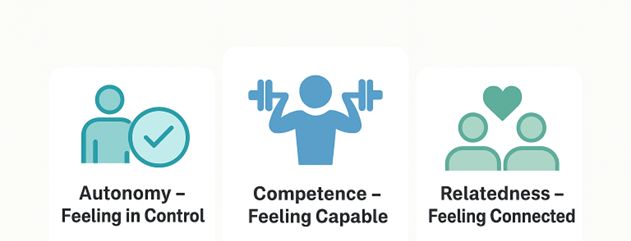
Autonomy – Feeling in Control
Consumers want to feel in control of their decisions. They gravitate toward brands that offer customization, flexibility, and transparency, and resist options that feel forced. Even pre-set bundles or default choices work best when they still feel voluntary.Competence – Feeling Capable
Consumers seek to feel capable and successful. They are drawn to brands that make complex tasks easier and avoid products that create confusion or inadequacy. Services that help them improve, like fitness apps, financial tools, or creative software, often earn long-term loyalty.Relatedness – Feeling Connected
Consumers want to feel connected and valued. They engage with brands that express empathy, shared values, and a sense of community. Reviews, social proof, and authentic customer service play a major role in shaping decisions.
Effective research grounded in Self-Determination Theory reveals the deeper motivations behind consumer choices, allowing brands to create experiences that feel genuinely satisfying and empowering. When these psychological needs are understood and addressed, customers are more likely to engage, stay loyal, and advocate for the brand. Neglecting these drivers, even with excellent products, can lead to frustration and lost opportunities.