
Evidence Builds Winning Brands
In today’s fast-moving marketplace, creating campaigns that resonate with audiences is more than just a creative exercise; it is a strategic necessity. Evidence plays a critical role in ensuring that messaging, concepts, and campaigns not only capture attention but also forge meaningful connections with consumers. By systematically validating ideas throughout the brand innovation journey, companies turn assumptions into actionable insights and strengthen the foundation of every brand decision.
Turning Evaluation into Actionable Insights
Validation is more than feedback, it transforms marketing research into clear, actionable insights that have the power to inform every stage of brand development. By testing and evaluating concepts and messaging, brands can identify what resonates, what falls flat, and what can be optimized for maximum impact. This process strengthens brand equity, ensures consistency, and drives measurable results, while also providing a roadmap for future initiatives.
Building Trust and Confidence Through Evidence
Brands that invest in validation build stronger, more trusted relationships with their audiences. By relying on evidence rather than assumptions, decision-makers gain confidence in their strategies, knowing they are backed by consumer insights. This approach reduces risk, increases efficiency, and ensures that creative efforts translate into tangible business outcomes.
Validation Stages Across the Brand Journey
The brand innovation journey involves multiple phases, each offering unique opportunities for research-driven validation:
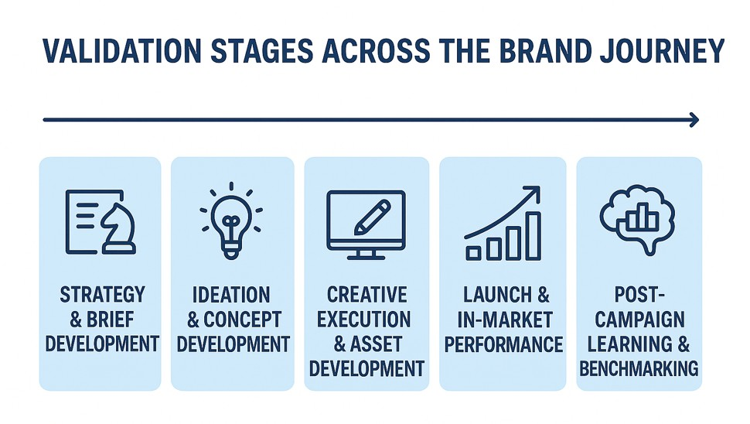
Strategy & Brief Development – At the outset, validation ensures that the strategic foundation is aligned with market realities and consumer needs. Research at this stage confirms that brand objectives, target audiences, and positioning are clearly defined and actionable.
Ideation & Concept Development – Early-stage ideas are tested to gauge appeal, clarity, and relevance. This helps teams focus on concepts with the greatest potential while discarding or refining weaker options before significant resources are committed.
Creative Execution & Asset Development – As concepts evolve into tangible campaigns, validation evaluates the effectiveness of messaging, visuals, and other creative assets. This ensures that the final execution resonates with audiences and communicates the intended brand story.
Launch & In-Market Performance – Validation doesn’t stop once campaigns go live. Tracking performance in-market provides insights into consumer engagement, purchase behavior, and overall campaign effectiveness, allowing for real-time adjustments if necessary.
Post-Campaign Learning & Benchmarking – After the campaign concludes, research captures lessons learned, measures success against objectives, and informs future initiatives. This stage creates a feedback loop that continuously improves brand strategy and creative execution.
From Insights to Growth
By embedding validation throughout the brand innovation journey, companies can create campaigns that resonate, strengthen brand equity, and drive measurable growth. It’s a disciplined approach that turns ideas into action, ensuring that every touchpoint with consumers is intentional, evidence-based, and impactful.
Ultimately, validation is not just a step in the process, it’s a mindset that empowers brands to innovate with confidence, make smarter decisions, and deliver experiences that audiences truly value.