
Unlock Your Brand’s Potential: Understanding Brand Maturity
Every organization wants an iconic brand.
But very few teams stop to ask: Are we actually managing our brand in a way that gets us there?
Most organizations focus on campaigns, assets, and messaging.
What they rarely evaluate is how mature their brand actually is, and whether their internal management habits support the brand they aspire to become.
A Brand Maturity Model gives teams that missing lens. It defines the five stages brands move through as they evolve:
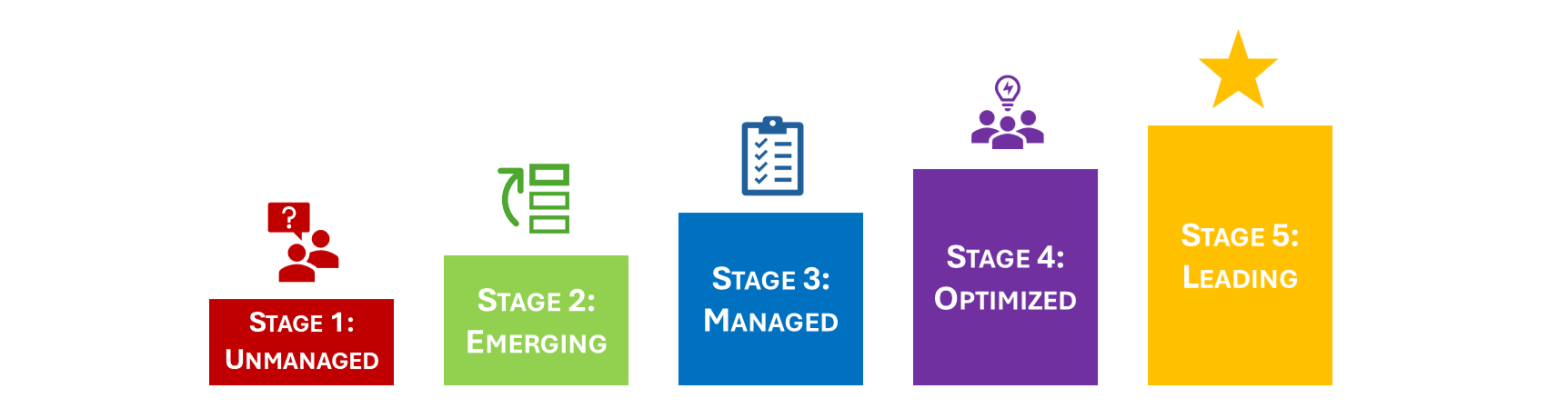
Unmanaged – The brand has little structure or governance; messaging, visuals, and experiences are inconsistent across teams and touchpoints.
Emerging – Core brand elements exist, but adoption is uneven and teams interpret the brand differently.
Managed – Guidelines, messaging, and processes are documented and consistently applied across channels.
Optimized – Brand execution is fully integrated; teams leverage it strategically to drive engagement, loyalty, and differentiation.
Leading – The brand sets the standard in its market; it is distinctive, emotionally resonant, adaptive, and influences organizational strategy.
When teams understand these stages, three things happen quickly:
1. They can finally assess how they’re really managing the brand
Are they operating like Stage 2 while trying to look like Stage 5? The model exposes the gap.
2. They see what’s preventing them from becoming the brand they want to be
Maybe adoption is weak. Maybe the story is unclear. Maybe every team is improvising.
The barriers become visible.
3. They learn what it takes to reach higher stages
Each level highlights specific needs such as stronger guidelines, clearer narrative, better alignment, more intentional stewardship, or deeper emotional differentiation.
This model reframes how teams think about their brand: it’s not just about the output, but the engine behind the output. When teams know their maturity stage, they can finally see the path to stronger alignment, better creative, and greater impact.
Iconic brands aren’t lucky. They’re intentional.